Tippy Toes
/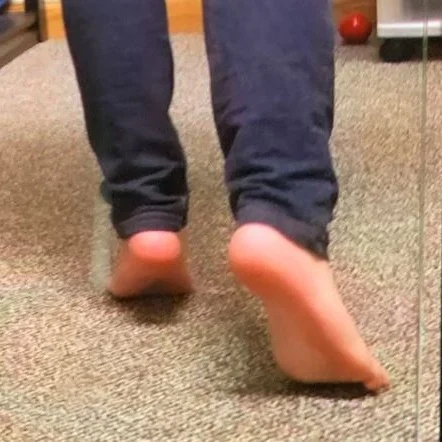
Toe walking is the failure of the heel to initially contact the floor while walking. There are a variety of reasons for this, but if there is no medical reason for it, then it is called idiopathic toe walking.
Read MoreTherapy OPS is blogging about everything therapy! Check out the blog to find therapy/home techniques, latest research, and more!
Toe walking is the failure of the heel to initially contact the floor while walking. There are a variety of reasons for this, but if there is no medical reason for it, then it is called idiopathic toe walking.
Read MoreWe spend a fair amount of time working with preschool children who demonstrate articulation and/or phonological impairments. A review of various treatment approaches by researchers in our field, revealed that what is treated may be more important than how it is treated.
Read MoreCaregivers, we see you. We are so fortunate to encounter caregivers daily. We have the opportunity to work with them, talk with them and listen to them. They care so much for their children that they come first in their life no matter the circumstance. Since it is National Family Caregivers Month…
Read MoreThanksgiving time brings families together and many new foods to the table. Picky eaters experience many challenges during this time. Together our occupational therapists and speech-language pathologists have compiled a list of strategies to make the holiday enjoyable.
Read MoreFall is upon us and winter is just around the corner. The leaves are beginning to change colors and the temperatures are quickly decreasing. With these changes, we also need to adapt to the seasons by adjusting our clothing choices, exploring other ways to engage in physical activity and finding strategies to maintain good mood and behavior with far less vitamin D intake.
Read MoreTummy time is an important part of development. By spending time on their tummy, babies develop muscles in the neck, back, arms, and hips. Each of these muscles are necessary to work toward developmental milestones like holding the head upright, rolling, sitting, crawling, and walking. Additionally…
Read MoreOctober is bullying prevention month and we wanted to pass along a really great blog from the the website stopbullying.gov. While all forms of bullying should not be tolerated, kids with behavioral, emotional, or developmental disabilities are twice as likely to be bullied as typical kids.
Read MoreChildren’s ability to regulate sensation-the process of noticing, organizing, and integrating information from the environment and their body and then processing and responding appropriately-greatly contributes to self-regulation.
Read MoreTypically, simple sentences emerge between 24-26 months of age. At this time, a child transitions from simply combining words (more please) to using short sentences that have a subject and verb (I eat). As they progress, you will notice…
Read MoreDid your child eat their recommended amount of fruits and vegetables today? I am going to guess not, because the CDC stated that from 2007-2010, 9 out of 10 children did not eat their recommended daily value of vegetables!
Read MoreUnsure of what to do with those empty shoe boxes or empty plastic milk jugs? What about the pressure of having the need to go and buy the latest and greatest toy? Have no fear! With the help of our Speech Pathologists, not only have we identified everyday objects found around the house but ways you can incorporate learning and language that will engage your child and hopefully, forget the need to buy the hot new toy at the store
Read MoreCan you smell the food yet? It is that time of year already, the Great Minnesota Get-Together! The state fair offers a variety of food, rides, animals, shops and more. The Minnesota State Fair has been around since 1859, making it a family tradition for many.
Read MoreWhen you think of daily occupations for your child, does your mind tend to wander towards activities such as them getting ready in the morning, working on homework, participation in school, eating meals, etc.? Sleep may not come to mind, but believe it or not, sleep is a daily life occupation, and a very important one at that!
Read MoreA common concern that we hear at Therapy OPS is, “my child’s vision is fine, they have 20/20, so why are the still having a hard time reading, writing and learning?!” While 20/20 vision is great to have, there is quite a bit more that goes into vision than meets the eye (see what I did there?).
Read MoreSocial-emotional development includes a group of skills that are established at a very young age. These skills include the ability to create and maintain positive relationships with others and how the child experiences, expresses and manages their emotions.
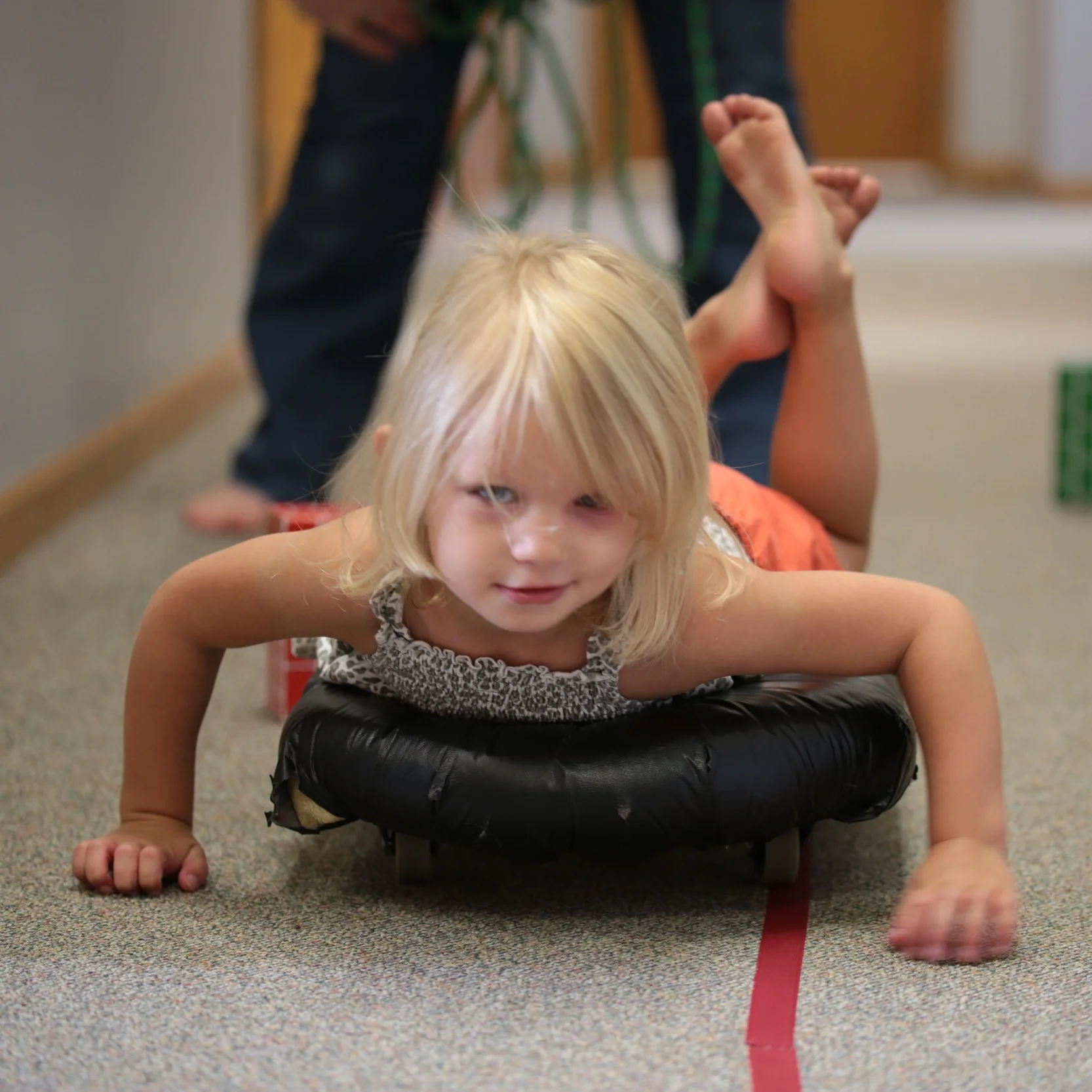
Read MoreScooter boards are something you may see us use often at Therapy OPS. We use them frequently because they are not only a TON of fun and motivating for the kids, but they also promote a variety of skill building!
Read MoreWith summer time officially here, we are seeing many families heading up the cabin. Cabins are a time for family fun and a break from the real world…and didn’t you know, a great time to work on therapy?! While it is a great time to rest and relax, we need to remember that therapy is still important!
Read MoreAt Therapy OPS, we are always trying to improve our practices by googling, reading research, experimenting, and collaborating with others. This week, the speech department read an interesting article that reviewed some myths and recently disproven theories that affect language therapy.
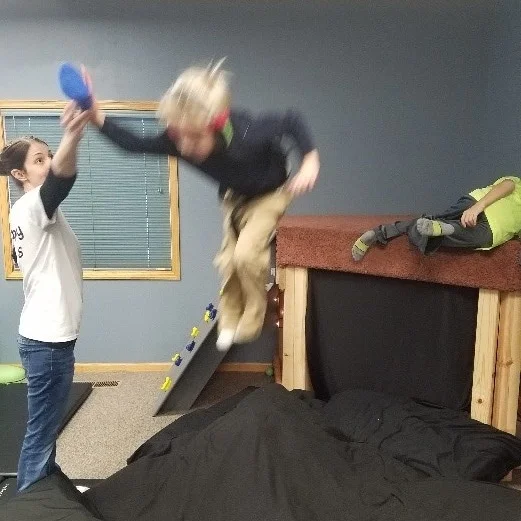
Read MoreBody awareness is a child’s ability to know where their body is in space and how it moves. Children who struggle with body awareness may appear clumsy, or uncoordinated, and may sometimes be described as ‘dare devils’. Signs that you can see or experience include:
Read MoreRoutines are simple and easy to keep. But sometimes, we focus so much on keeping things routine that we get stuck in our familiar ways. This makes it hard to try something new or venture out of our comfort zone.
Read MoreTherapy OPS is an therapy clinic for children located in Inver Grove Heights and Hastings, and serving Minneapolis, St. Paul, and the surrounding areas. We currently offer Occupational, Physical, and Speech therapy, social skills groups, and alternative therapy modalities, such as therapeutic listening systems and Interactive Metronome.
Complete the form below or call 651-455-0561 to schedule a free tour or start the process of helping your child.
Stay up to date on events and news with our newsletter
Monday — Thursday
7am — 6pm
Friday - closed
Inver Grove Heights Locaton:
2925 Buckley Way
Inver Grove Heights, MN — 55076
651-455-0561 F: 651-457-4401
Hastings Location:
1312 S Frontage Rd
Hastings, MN 55033
Therapy OPS complies with applicable Federal civil rights laws and does not discriminate on the basis of race, color, national origin, age, disability, or sex. Therapy OPS does not exclude people or treat them differently because of race, color, national origin, age, disability, or sex.